Buying Guide
Veterinary Needle Sizes and Gauges: Which Gauge for Cattle
Gauge, length, hub type and quantity decide which veterinary needle you need. This guide lists the standard gauge range, what each size suits, and what to put in an inquiry.
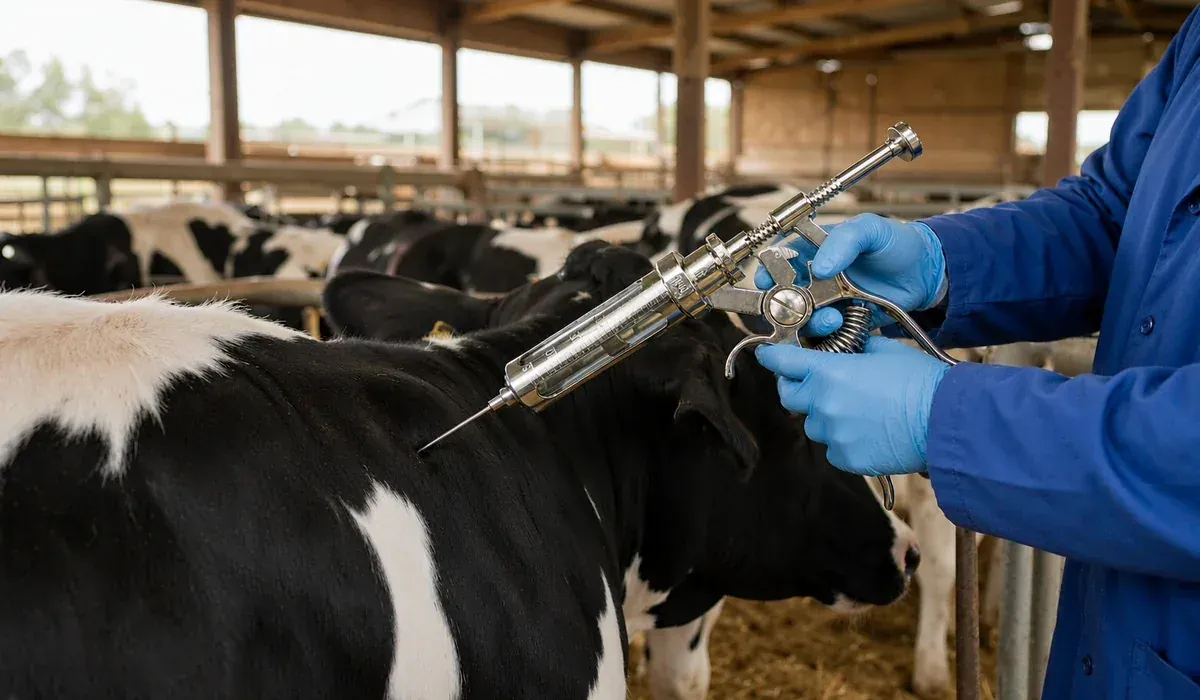
A veterinary needle is specified by three numbers: gauge, length and hub type. Get them wrong and the needle either bends, blocks, or delivers the dose more slowly than the animal in front of you can take.
This guide covers the standard gauge range, the lengths usually stocked, and how to write the specification so a supplier quotes the right product on the first reply.
What the gauge number means
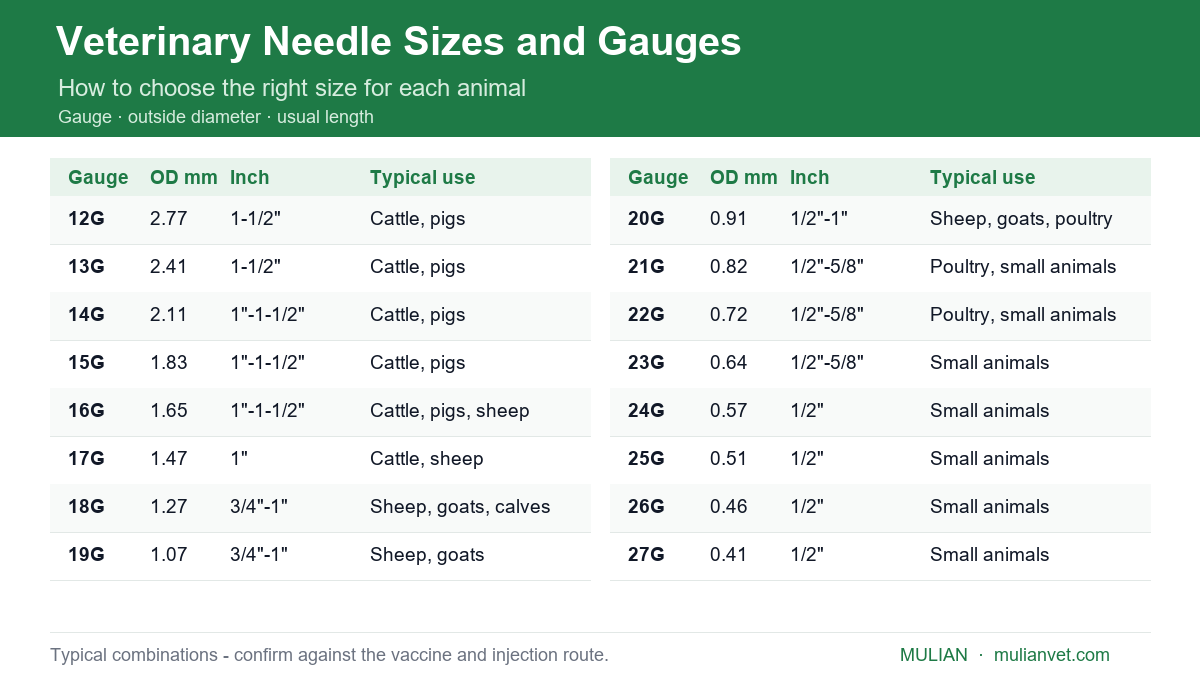
Gauge is the outside diameter of the steel tube. The scale runs backwards: a 14G needle is thicker than a 25G needle. The range follows ISO 9626 / Stubs, the scale used by most veterinary needle makers.
Thicker needles (12G to 16G) flow faster, which matters when you are injecting large volumes into cattle or pigs. Thinner needles (22G to 27G) cause less tissue damage and suit poultry, small ruminants and companion animals.
Which gauge for which animal
These are the ranges most buyers order. Local practice and vaccine viscosity can shift the choice by one or two gauges.
Cattle and pigs — 14G to 18G for intramuscular and subcutaneous work. Large-volume injections and thick vaccines sit at the thicker end.
Sheep and goats — 16G to 20G. A 20G needle is common for subcutaneous vaccination.
Poultry — 20G to 23G for wing-web and breast vaccination, depending on the vaccine and the age of the bird.
Dogs, cats and other small animals — 21G to 25G, with 22G and 23G the usual choice for subcutaneous and intramuscular injections.
Choosing the needle length
Length is written in inches or millimetres. The common stock lengths are:
1/2 inch (13 mm) — intradermal work and very small animals.
5/8 inch (16 mm) — subcutaneous injections in small animals and poultry.
3/4 inch (20 mm) — subcutaneous and intramuscular in sheep, goats and calves.
1 inch (25 mm) — general intramuscular use in cattle, pigs and sheep.
1-1/4 inch (32 mm) — deeper intramuscular injections in cattle and heavy pigs.
1-1/2 inch (38 mm) — thick skin and deep muscle, mainly cattle.
2 inch (51 mm) — deep intramuscular work in large cattle.
As a rule, the needle should reach the target tissue without the hub touching the skin. If the hub is buried, the needle is too long; if the needle barely enters, it is too short.
Hub type: Luer lock or round hub
The hub is the plastic or metal part that joins the needle to the syringe. Luer-lock hubs twist and lock onto the syringe, which stops the needle coming loose during repeated dosing. Round (push-on) hubs fit plain syringes and are common on lower-cost vaccination needles.
Tell the supplier which hub your syringes use. A Luer-lock needle will not fit a plain syringe, and a round-hub needle will not lock onto a Luer syringe.
If you need a non-standard size
If the size you need is not in the standard range, specify it by outside diameter and length instead of gauge: for example, 1.2 mm OD × 25 mm. Add the hub type and the quantity, and most factories can quote a custom run.
Custom work usually carries a minimum order quantity and a longer lead time than stock items, so ask for both before you commit.
What to put in your inquiry
A complete needle inquiry answers five questions:
1. Gauge or outside diameter.
2. Length in inches or millimetres.
3. Hub type — Luer lock or round hub.
4. Quantity in pieces, boxes or cartons.
5. Destination port, if you want a freight estimate.
With those five lines a supplier can quote without a second round of questions.
MULIAN supplies lock hub and round hub veterinary needles across the standard gauge range, plus custom sizes on request. Send your gauge, length, hub type and quantity to vivian@mulianvet.com and we will reply with availability and pricing.