Buying Guide
Livestock Syringes: Who Uses Them, Where, and Why They Pay Off
Who buys livestock syringes, where they are used, and the practical problems they solve on farms, clinics and wholesale operations.
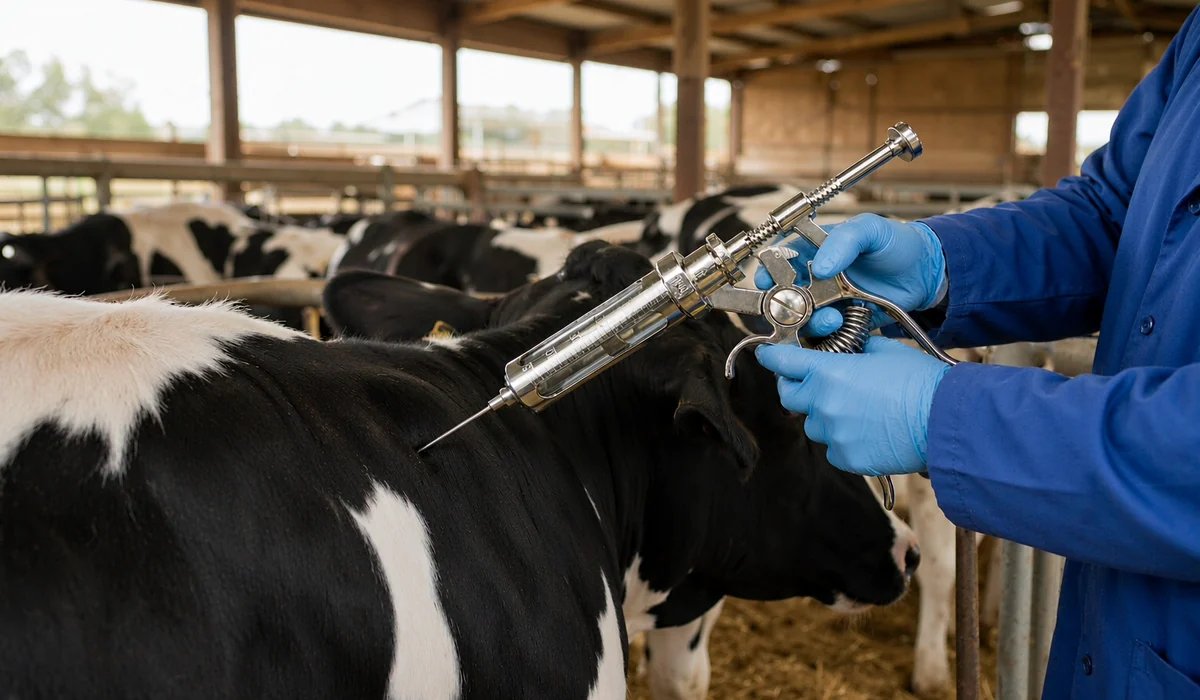
A livestock syringe looks like a minor purchase. On a working farm it decides dose accuracy, labour hours, animal stress and — with cattle — handler safety. This short guide covers the four questions buyers most often need answered before ordering.
1. Industries and customers that need them
Veterinary syringes are bought by five main groups.
Commercial farms: beef, dairy, pig, sheep and poultry operations running routine vaccination programmes.
Integrated livestock groups and contract-farming companies, buying at volume for multiple sites.
Veterinary clinics and mobile veterinary services treating individual animals as well as herds.
Breeding and artificial insemination centres, which also use catheters and drenching equipment.
Wholesalers, distributors and farm-supply retailers reselling under their own brand.
2. Where and how they are used
These tools work in wet, dirty and corrosive conditions, so the setting dictates the design.
Environment: cattle barns and races, pig houses and farrowing crates, poultry sheds and open pasture.
Equipment used alongside: repeating and automatic syringes, pistol-grip injectors, continuous drencher guns with a drench tube, and hypodermic needles with brass rectangle or aluminium hubs.
Process: herd and flock vaccination rounds, newborn piglet processing, oral drenching and deworming, individual therapeutic injection, and record-keeping tied to ear-tag identification.
3. Problems they solve
Inaccurate dosing — graduation marks are moulded into the glass barrel or a TPX graduated barrel, so they do not wear off with cleaning.
Leakage and needles coming loose — a Luer-lock adaptor locks the needle tightly, and a secure needle guard prevents disconnection mid-injection.
Cross-contamination — where cleaning between animals cannot be guaranteed, sterile, non-pyrogenic single-use needles remove the risk entirely.
Slow, tiring work — a repeating mechanism with an ergonomic one-handed grip keeps throughput up and hand fatigue down.
Handler injury on large animals — a long-arm injector keeps the operator out of kicking range.
Seal failure — most breakdowns are just dry seals; a silicone-treated washer costs almost nothing and restores full suction.
4. What it means for your operation
Lower cost per animal — reusable chrome-plated brass bodies spread their cost over years of use.
Less vaccine wasted — accurate dose adjustment stops product being drawn and discarded.
Shorter rounds — repeating action and one-handed handling cut the time per head.
Calmer animals — ultra-sharp, tri-bevelled, anti-coring needles reduce tissue drag and discomfort.
Simpler stock control — the universal Luer-lock interface accepts standard needles from any source.
Tell us the species, the dose, and whether you prefer reusable or sterile single-use — we will match the model and quote. MOQ differs from model to model, so just email us the reference and quantity, or ask us to check current stock. OEM logo printing and customised packaging are available.
Standard lead time is 30 days, adjusted to the order quantity and specification. Standard trade term: FOB Ningbo.